
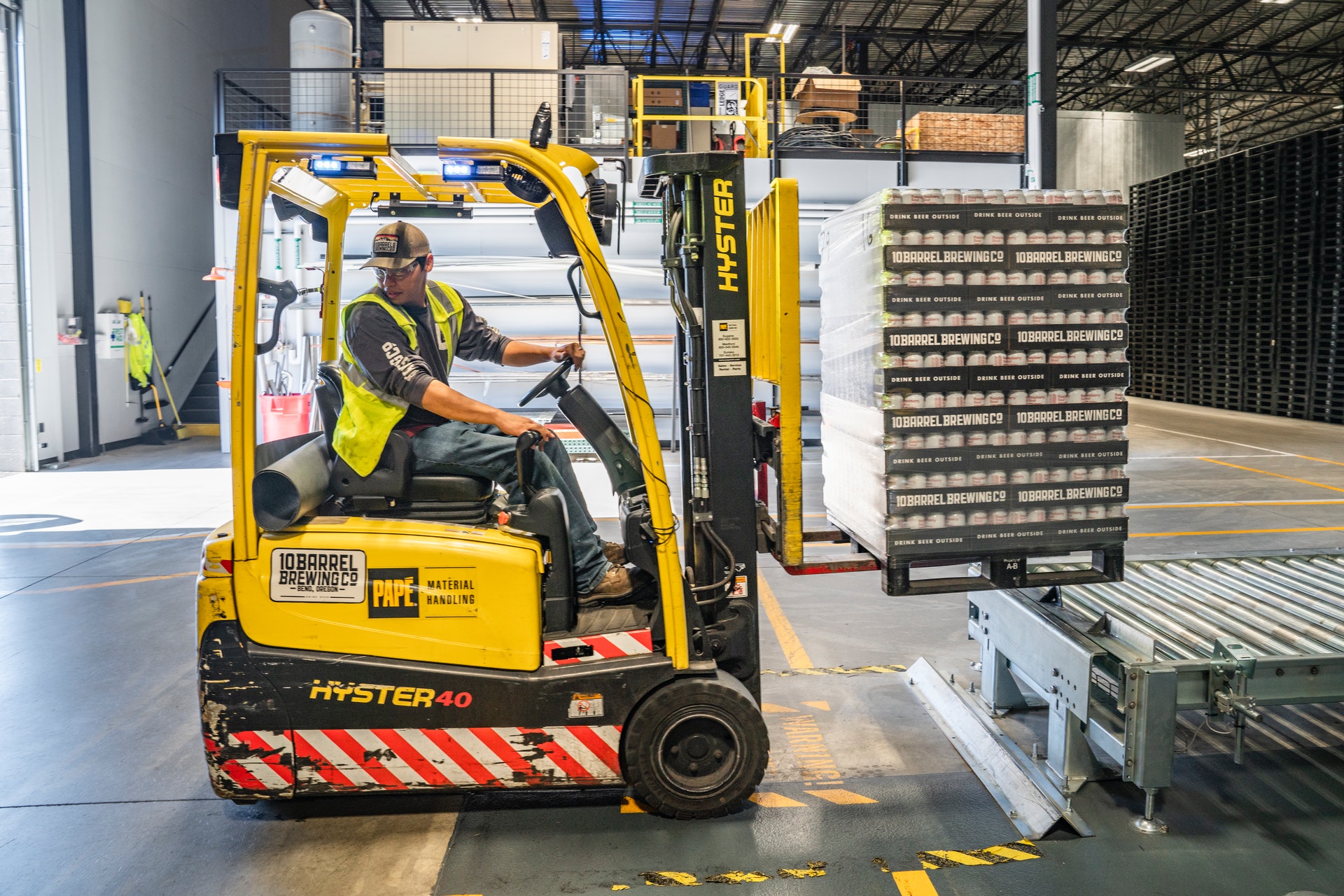
When businesses compare industrial vehicles for sale, the decision should not come down to price alone. The right choice depends on what your team needs to move, where the unit will operate, how often it will run, and the support you need after delivery.
At Industrial Vehicles, we help Australian businesses choose equipment that suits real site conditions. If your operation is in Melbourne, regional Victoria or nearby areas, use the points below before requesting a quote.
Key points
- Choose the vehicle around the task first, then compare models.
- Check load weight, towing demand, and seating requirements before asking for pricing.
- Review floor surface, gradients, space limits, and traffic flow early.
- Consider power source, safety features, servicing, and custom options as part of long-term value.
Start with the work the industrial vehicle must handle
Before reviewing specifications, define the day-to-day job. Will the vehicle carry parts through a warehouse, tow bins around a facility, transport staff across a large site, or support maintenance teams with tools and equipment?
This first step helps narrow the field. A people mover is built for comfort and passenger access. A tow tractor is designed around pulling power. A utility vehicle may suit teams that need trays, storage, or flexible movement between work zones. When you are comparing industrial vehicles for sale, matching the unit to the application is the best place to begin.
Know your load, tow, and passenger numbers
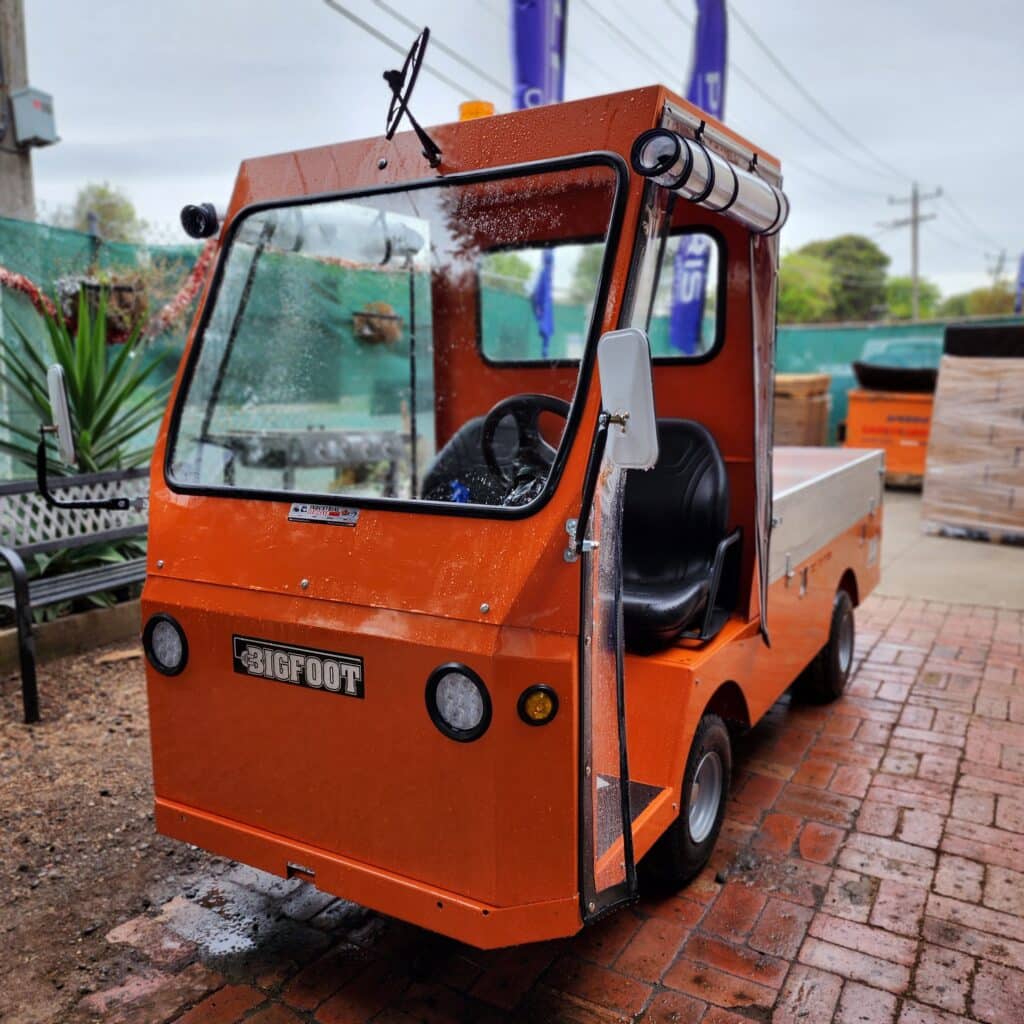
Clear details lead to a better recommendation. For carrying tasks, note your average load, maximum load, tray size, and how many trips the vehicle will complete each shift. For towing, check the loaded trailer weight, hitch type, route distance, stopping points, and whether the path includes ramps or tight turns.
Passenger numbers also matter. A two-seat unit may work well for maintenance crews, while a larger site, campus, hospital, resort, or venue may need four, six, or eight seats. If comfort, access, or frequent boarding is important, include that in your enquiry.
Review the conditions on your site
The same model can perform differently depending on the environment. Check whether the vehicle will operate indoors, outdoors, or across both. Measure doorways, aisles, loading areas, and turning points. Also consider polished concrete, asphalt, gravel, grass, wet areas, and uneven ground.
Safety needs to be part of this review. Safe Work Australia advises workplaces to identify hazards, assess risks, and apply controls when managing plant, as set out in its Model Code of Practice for managing plant risks. In day-to-day terms, think about where vehicles, workers, visitors, and loading activity cross paths.
Useful safety features can include lights, mirrors, reversing alarms, seatbelts, speed controls, and good operator visibility. The right setup depends on the site layout, not just the vehicle specification sheet.
Choose a power source that fits daily use
Power source affects running cost, noise, maintenance and where the vehicle can work. Electric models are often a good fit for warehouses, hospitals, campuses, resorts and other environments where quiet operation and cleaner movement around people are valuable. You can compare suitable options in our range of electric industrial vehicles.
Petrol, diesel or LPG may be more suitable when the priority is long outdoor use, fast refuelling, high torque or rougher terrain. The best option depends on shift length, charging or fuel access, towing demand and the work pattern across the day.
Look beyond the purchase price
The lowest upfront price is not always the best value. Ask about service intervals, spare parts, warranty support, local workshop access and whether the supplier can service the equipment after delivery.
This is especially important for Melbourne businesses that rely on vehicles to keep people, tools or stock moving. Downtime can affect productivity quickly, so after-sales support should sit beside performance and price in the buying decision.
Consider whether a standard model is enough
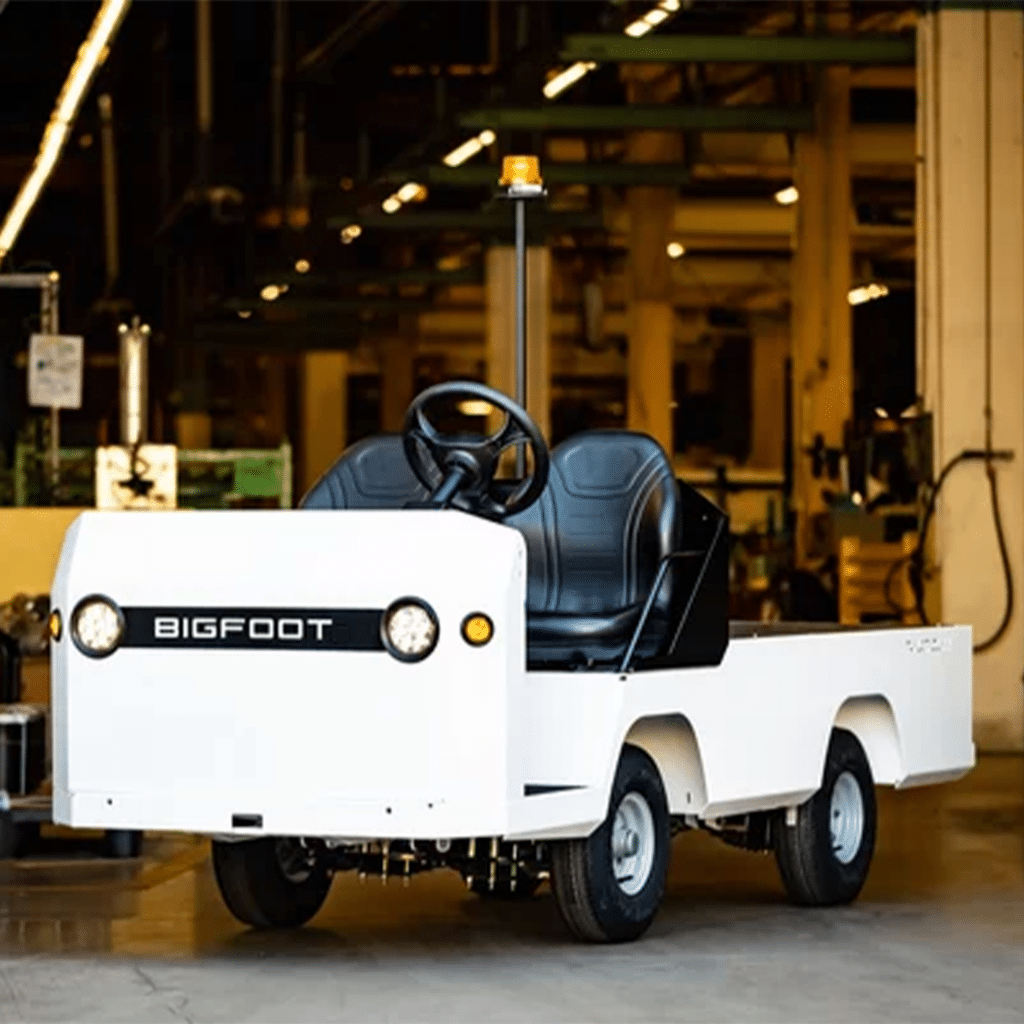
Many businesses can use a standard vehicle without changes. Others need a more specific setup, such as a cabin, trailer, hitch, lighting package, tray modification, battery system or body change.
Discuss custom requirements early, because they can affect build time, compliance needs and final cost. Our team can help design custom industrial vehicle solutions for sites that need a more tailored approach.
What to prepare before requesting a quote
Before you enquire about industrial vehicles for sale, gather the details a supplier needs to make a useful recommendation. A simple checklist can save time and help avoid the wrong fit.
Quote checklist:
- What will the vehicle mainly be used for?
- What is the maximum load it needs to carry?
- Will it tow trailers, bins, stock or equipment?
- How many people need to travel at once?
- Will it operate indoors, outdoors or both?
- What surfaces will it drive on each day?
- Are there ramps, slopes, tight turns or narrow doorways?
- How long does it need to run during a shift?
- Is charging, petrol, diesel or LPG access available on site?
- Are there required accessories, safety features or custom changes?
Photos or a short video of the area can also help. The more context you provide, the easier it is to recommend an industrial vehicle that fits the job without adding features you do not need.
Ready to compare your options?
If you are reviewing industrial vehicles for sale and want advice before buying, speak with Industrial Vehicles. We can help you compare vehicle type, power source, site fit, load needs, custom options and ongoing support, then guide you toward a practical solution for your business.
FAQs
1. What should I compare before buying an industrial vehicle?
Compare the task, load rating, towing demand, passenger count, site surface, route distance, power source, safety features, servicing needs and supplier support. These details help narrow the options and make the quote more accurate.
2. Are electric industrial vehicles suitable for Australian worksites?
Yes, electric models can suit many indoor, mixed-use and noise-sensitive environments. They work best when the site has suitable charging access, enough run time between charges and routes that match the vehicle’s capability.
3. How do I know what load capacity I need?
Start with the heaviest item or the combined load your team expects to carry. Then allow for tray size, ramps, braking distance, route length and how often the vehicle will be used during a shift.
4. Can industrial vehicles be customised?
Yes, many units can be adapted with cabins, hitches, lighting, body changes, battery systems, trays and trailers. Customisation is useful when a standard model does not fully match the work, site layout or safety requirements.
5. Why choose a Melbourne-based industrial vehicle supplier?
A local supplier can better understand Victorian worksites, arrange practical advice and support servicing needs more efficiently. Industrial Vehicles operates from Maribyrnong and works with businesses across a wide range of applications.
