
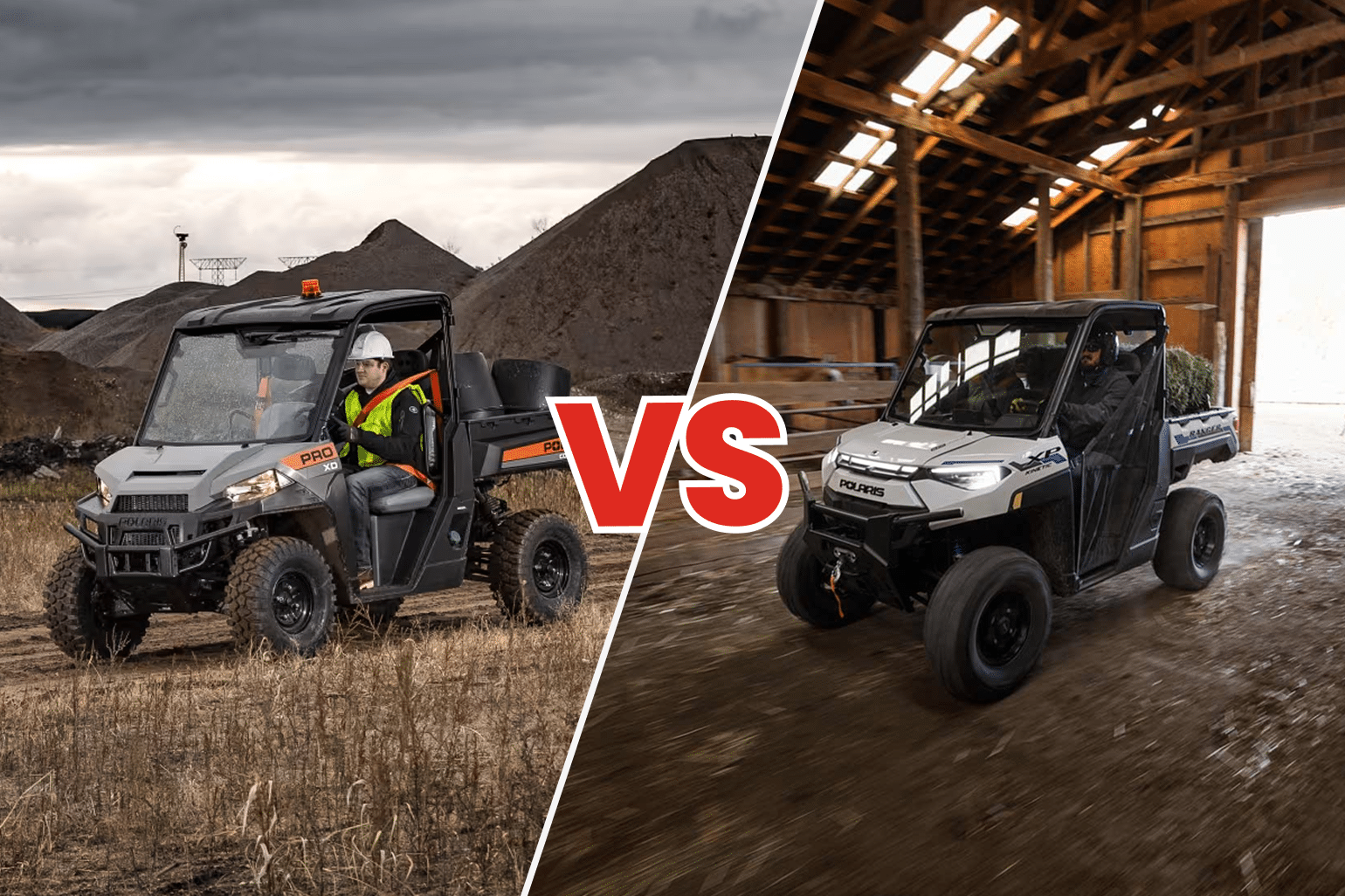
When businesses call us to talk through electric versus diesel utility vehicles, the conversation usually starts with price. That’s a fair place to begin, but it’s rarely the number that matters most. After nearly 50 years supplying industrial vehicles in Melbourne and across Australia, we’ve learned that running cost, upkeep, and where the machine needs to work matter far more.
Key points
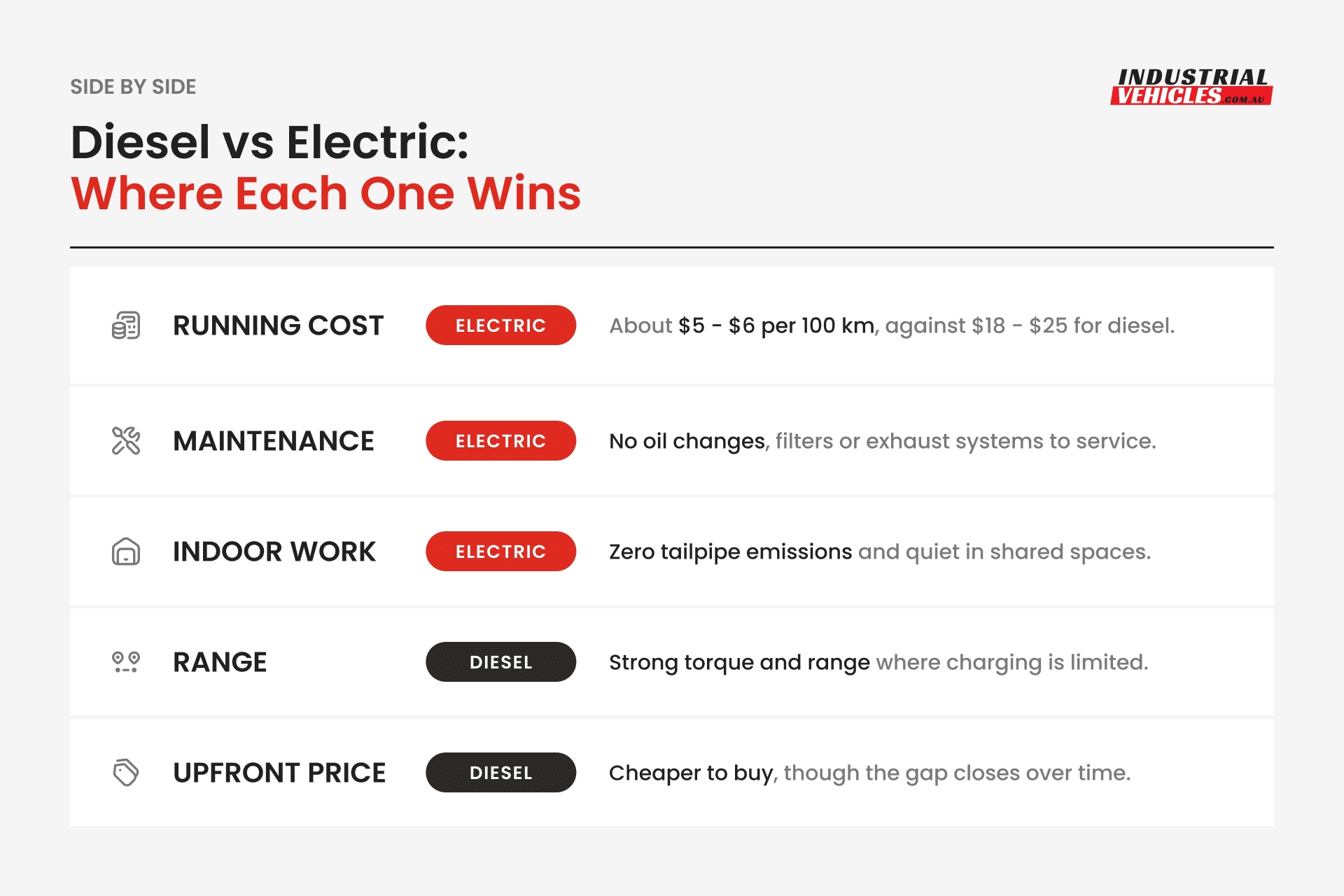
- Diesel delivers strong torque and range for rugged outdoor tasks, but fuel costs are higher and less predictable than electricity.
- Battery-powered models need far less scheduled maintenance, with no oil changes, filters, or exhaust servicing.
- Diesel exhaust is classified as carcinogenic by international health authorities, making it unsuitable for warehouses, hospitals, and other enclosed sites.
- Diesel still suits remote, high-load, long-range outdoor applications where charging infrastructure is limited.
- For most Melbourne businesses running indoor or mixed-use sites, going electric is the more practical long-term choice.
Running Costs: Fuel vs Electricity
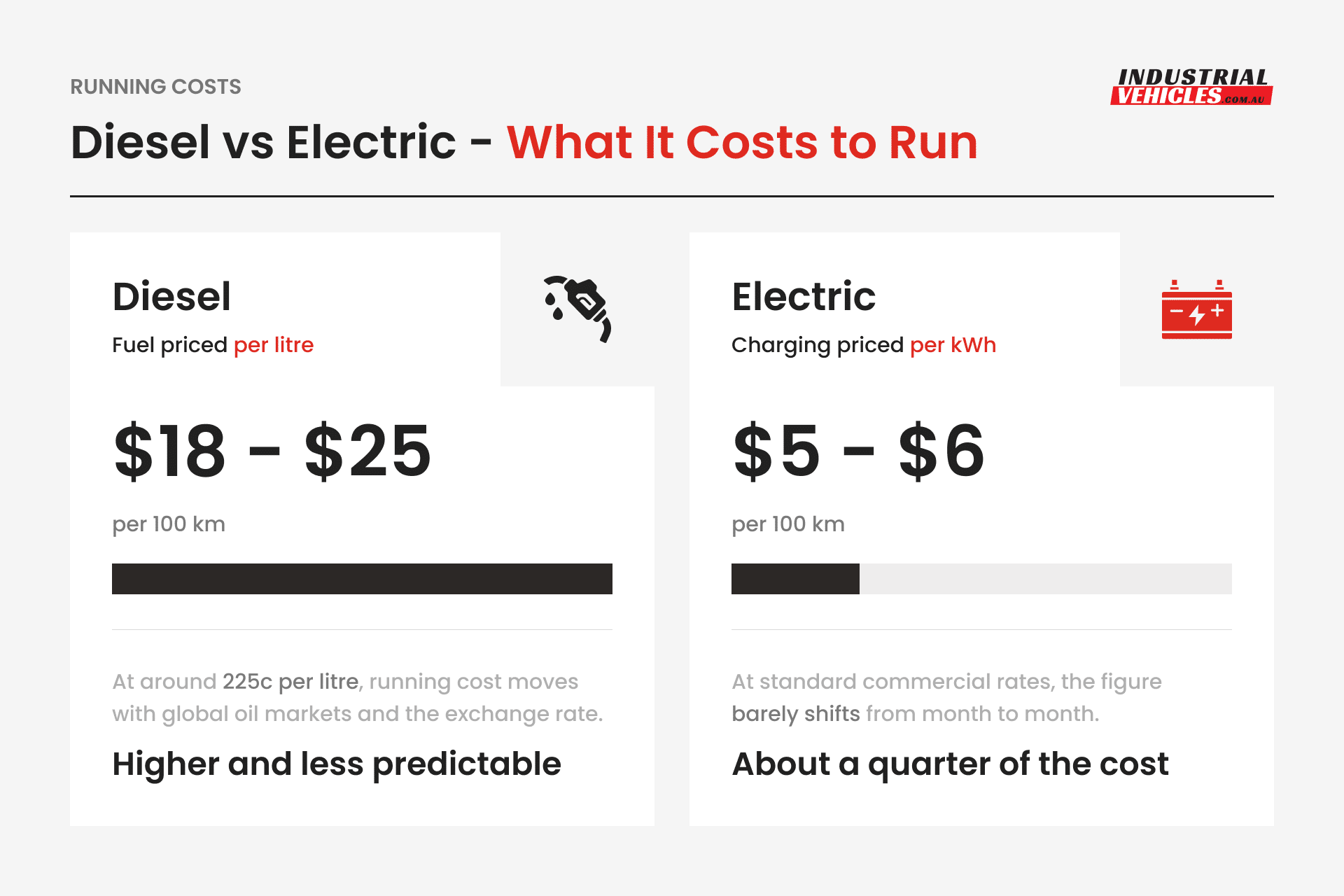
Diesel has a reputation for efficiency, and per litre, that’s fair. The problem is what a litre costs. As of mid-2026, the national average price sits at around 225 cents per litre, moving with global oil markets and the exchange rate. For a machine towing loads on site, that translates to roughly $18 to $25 per 100 kilometres.
Charging a battery-powered vehicle costs a fraction of that: around $5 to $6 per 100 kilometres at standard commercial rates, a figure that barely shifts month to month. Across one shift, the gap looks modest. Across a full year on a busy worksite, it adds up quickly.
Maintenance: Durability vs Simplicity
Diesel engines earn their reputation on the job, delivering strong pulling power and years of service under heavy use. That durability comes with upkeep: oil changes, filter replacements, and attention to particulate systems.
Battery drivetrains skip most of that. There are no oil changes, no filters, and no exhaust components to service, and regenerative braking reduces wear on pads by absorbing part of the load on every stop. If keeping your fleet on the floor matters more than raw pulling power, our electric utility vehicles are built for exactly that.
Emissions and Indoor Safety
This is often where the decision settles itself. Diesel exhaust contains particulate matter and nitrogen oxides that accumulate quickly in enclosed spaces. Occupational health authorities classify diesel exhaust as carcinogenic to humans, and warehouses and depots are commonly flagged as places where it builds to unsafe levels.
A battery-powered vehicle produces zero tailpipe emissions and runs quietly, making it suitable for warehouses, distribution centres, hospitals, and any site where people and machines share close quarters. If any part of your operation happens indoors, diesel isn’t a safe long-term option.
Use Cases: Where Each One Wins
Diesel still has a place on remote sites with limited charging infrastructure, or operations covering long distances over variable terrain, such as mining and large-scale construction.
For most businesses in warehousing, manufacturing, healthcare, hospitality, and government operations, battery power fits the day-to-day reality of the work better. Repetitive, predictable routes play to its strengths: lower running costs, quieter operation, and nothing to manage indoors. Our range of utility vehicles covers both power types, so you can compare models suited to your load and terrain before deciding.
Which Is Right for Your Operation?
There’s no single right answer, only the right one for your site. Covering long distances outdoors with heavy loads and no charging infrastructure nearby, diesel deserves serious consideration. Running indoors, moving people or goods on repeatable routes, or wanting to control costs over the next few years, an electric drivetrain is very likely the stronger fit.
We’ve supplied businesses across Melbourne and Australia with the right vehicle for their site since 1976.
Not sure which power source fits your site? Talk to our team today, and we’ll help you choose with confidence.
Frequently Asked Questions
1. Is diesel ever the cheaper option overall?
It can make sense for remote or high-range applications, where saving on charging infrastructure outweighs higher running costs. For most repetitive site work, battery power ends up cheaper once fuel and servicing are factored in.
2. Can diesel machines be used indoors at all?
Generally, no. The exhaust builds up in enclosed spaces and poses a genuine health risk, so a zero-emission option is the safer choice for any indoor work.
3. How does load capacity compare between the two?
Diesel is valued for towing strength, but an electric drivetrain delivers instant torque from a standing start and holds up well in most applications. Capacity depends on the model, so it’s worth discussing your requirements with our team.
4. What is the real price difference upfront?
A diesel unit is often cheaper to buy outright, while a battery-powered model carries a higher initial cost due to the technology involved. That gap tends to close once lower running and servicing costs are factored in over the working life of the vehicle.
5. Is local servicing available for both types in Melbourne?
Yes. We operate from Maribyrnong and provide servicing, spare parts, and technical support for every vehicle we supply, whatever powers it.
