
Thanks to the rising costs of fuel and the environmental effects of fossil fuels, electric vehicles have gained popularity. In recent years, they have become increasingly common in commercial applications, from ferrying guests around resorts to operating in industrial facilities.
But how do you determine whether electric buggies or electric golf carts are the right choice for your application? When it comes to commercial use, the key differences between the two come down to their durability, power, and functionality.
Here, we’ve taken a closer look at the differences between electric vehicles to help you determine which is best suited to your needs.
Known as Australia’s premium supplier of world-leading industrial vehicles for 50 years, Industrial Vehicles is brought to you by Warequip Solutions. For personalised advice, contact our team today.
Electric Golf Carts
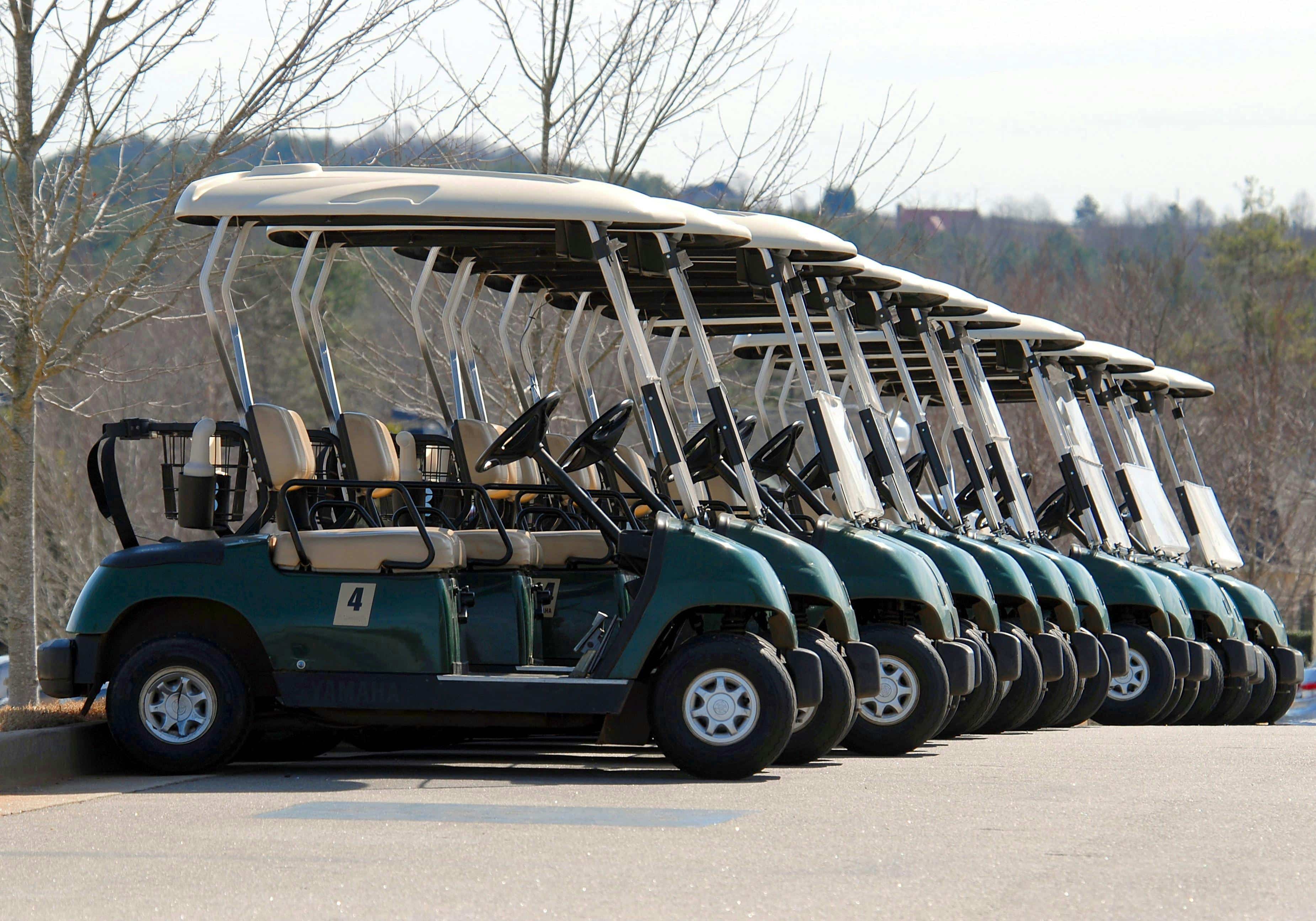
Electric golf carts are primarily designed for use on golf courses.
- Lower Speeds
As they’re primarily designed for navigating golf courses, golf carts typically have a top speed of between 24 and 32km/h. While this is certainly faster than walking pace, it does make them unsuitable for use on even low-speed roads. - Battery Range
As golf cart batteries have a much shorter range, these vehicles are better suited to short, repetitive routes. Golf courses and similar properties tend to have charging stations dotted around. - Limited Safety Features
More often than not, golf carts lack the safety features required for on-road use. This often restricts their use to private property, gated communities, resorts, and golf courses. - Specialised Use
Golf carts have been specifically designed for transporting golfers and their gear around the course, which means they’re more basic in functionality. While they can be used for other applications, this is typically limited to carrying passengers short distances. - Less Durable
Due to their lightweight construction, which focuses more on comfort and ease of use, golf carts tend to be less durable than their low-speed vehicle (LSV) counterparts. They also offer limited cargo space (often just a small rear basket or bench). - Terrain Handling
These vehicles perform best on smooth, flat surfaces, such as paved paths and manicured turf. While they can handle the gentle slopes found on a golf course, you’ll find that they don’t perform well on sand traps and other rough terrain. - Basic Customisation
While golf carts do allow for some customisation, such as seating configurations and inclusion of basic accessories (like cup holders, coolers, and rain covers), they are less customisable than their electric buggy counterparts.
Electric Buggies
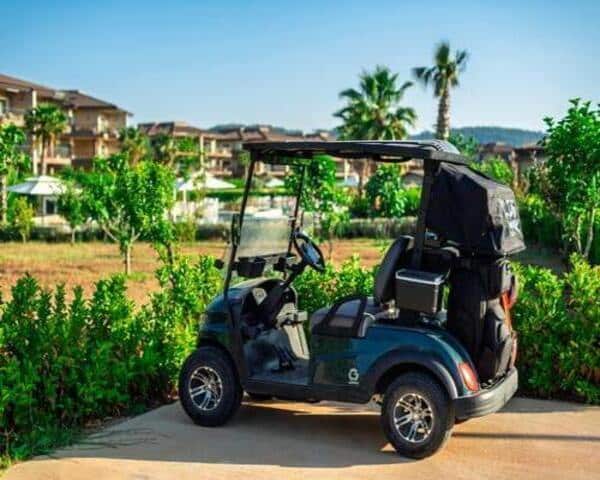
Also known as low-speed vehicles (LSVs), electric buggies are typically designed for applications beyond the golf course.
- Higher Speeds
Buggies are designed to travel at speeds of up to 40km/h, making them suitable for navigating larger properties and even roads with lower speed limits. If you have multiple facilities adjoining small public roads, you’ll be able to hop between them with an LSV. - Battery Range
Buggies feature a more powerful battery system, designed for extended use on a single charge. You’ll be able to traverse longer distances without worrying that the vehicle will run out of juice. - Street Legal Features
Buggies often include features (such as headlights, taillights, indicators, mirrors, and seatbelts) that enable them to meet specific safety regulations for on-road use. However, this may not be true in all jurisdictions, so seek clarification for your area. - Versatile Applications
Buggies are often used in various commercial settings to transport both people and materials, from resorts and airports to campuses and industrial facilities. Their purpose-built design enables them to handle transportation, towing, and carrying goods. - Rugged Durability
Thanks to their more rugged design, along with heavy-duty frames and commercial-grade components, electric buggies can generally carry heavier loads. - Terrain Handling
Designed with better suspension and ground clearance, an electric buggy is suitable for rough terrain like that found at parks, event grounds, and even construction sites. - Customisation Options
There are more customisation options when it comes to LSVs, from seating configurations to cargo space (like flatbeds and toolboxes), allowing them to meet specific commercial requirements. Other features include LED lighting, GPS, and weather enclosures.
Buggy or Cart? Tailoring Your Transport Solution
If your commercial application requires you to traverse public roads or involves longer distances, an electric buggy is generally the better choice. If your needs are limited to navigating a golf course or a similar type of private property, however, a standard electric golf cart may suffice.
Still unsure which electric vehicle will best meet your needs, or need a custom solution? Our expert team at Industrial Vehicles, including our in-house engineering and fabrication specialists, is here to help.
